
A dab rig is a purpose-built setup, not simply a smaller water pipe. Its usual parts are a water chamber, joint, banger or nail, and mouthpiece. Concentrates are heated in the banger or nail. Good glassware for concentrate setups brings these pieces together in a size and material that suit your routine.
When comparing rigs, it’s easy to focus on shapes and extra features. Start with practical questions: what each component does, how the rig fits your space, and which glass material suits regular use. A straightforward setup may suit you better than a more elaborate design.
This guide explains how dab rigs work and what to look for in their components, including splash guards, recyclers and percolators. It also covers how to weigh size, borosilicate glass and handling needs, so you can assess what each feature adds before choosing a setup.
- A dab rig uses a water chamber, joint, banger or nail, and mouthpiece to form a concentrate setup.
- Percolators add water filtration to help cool vapour, while recycler designs circulate it through two chambers.
- For general use, the guide recommends a borosilicate glass rig measuring 6-8 inches; size and design affect how it fits your space and routine.
- Let the banger or nail cool completely before handling or cleaning the rig.
- When you’re ready to explore glassware and related accessories, yabaDABS offers smoking accessories and glassware, alongside Hamilton Devices, XVAPE and XMAX vaporisers.
Benefits of dab rigs for concentrates
A dab rig is designed for concentrates, with components arranged around a heated surface. Its material, size and water path all shape the setup.
Borosilicate glass construction
Borosilicate glass is commonly used for dab rigs because of its heat resistance, clean flavour and versatility. It forms the body, while a quartz banger or glass nail provides a high-temperature surface. When choosing glassware for concentrate setups, assess the body, joint and base together. The joint needs to fit the heated component securely, and the base should sit steadily on your surface.
With glass, you can see the water chamber and its contents. A clear body, for example, makes residue or a low water level easier to spot. Consider the rig’s shape as well as its material. Narrow sections and intricate chambers can be harder to clean, so inspect the full glass path before choosing.
Vapour cooling through recycler rigs
Recycler rigs circulate vapour through two chambers. This connected path carries vapour through water before it reaches the mouthpiece, helping to cool it. Compare the route between chambers and the space around each section. A more involved pathway may need closer attention during cleaning than a simpler glass design.
A mini rig is described as 4-6 inches tall. That compact format can suit limited storage space, but its height alone doesn’t establish vapour potency. For glassware for concentrate setups, compare chamber shape, joint position and mouthpiece placement. Those details explain more about how the rig fits your routine than its height by itself.
A dab rig, nectar collector and e-rig each have a different format. A dab rig uses a water chamber and banger or nail; a nectar collector is handheld, while an e-rig uses electronic heating. Choose according to whether you prefer a glass chamber, a handheld design or an electronic format. For help comparing electronic options, see this e-rig vs portable dab pen comparison for concentrates.
Compare concentrate setup formats
Glassware for concentrate setups can include a rig body, water chamber, joint, mouthpiece and banger or nail. Borosilicate glass is commonly used for the body, while quartz bangers provide a high-temperature surface. Before assembling the pieces, check that the joint and banger fit together.
Risks include burns from hot components and cuts from broken glass. Keep the rig stable, handle heated parts carefully, and let the banger or nail cool completely before touching or cleaning it.
A dab rig is equipment. UK rules on possessing or using concentrates depend on the substance and circumstances, so don’t assume that owning a rig makes every concentrate lawful. Consider the substance separately from the glassware.
Size and material can be considered alongside the glass features. The Phoenix Recycler Glass Rig – 9 Arm Perc Edition is 24 cm tall, giving a stated height to consider when assessing where a rig will sit or be stored. Food-safe silicone used in silicone dab rigs comes in two types: tin-cured and platinum-cured. When comparing a silicone option with glass, keep the material and format in view, and consider whether the setup suits your handling, cleaning and storage preferences. The best fit depends on which features matter in your routine.
Splash guards, recyclers and percolators
Percolator design affects how water and vapour move through a rig. Compare the percolator’s purpose with cleaning access and splash control.
Honeycomb and inline percolators
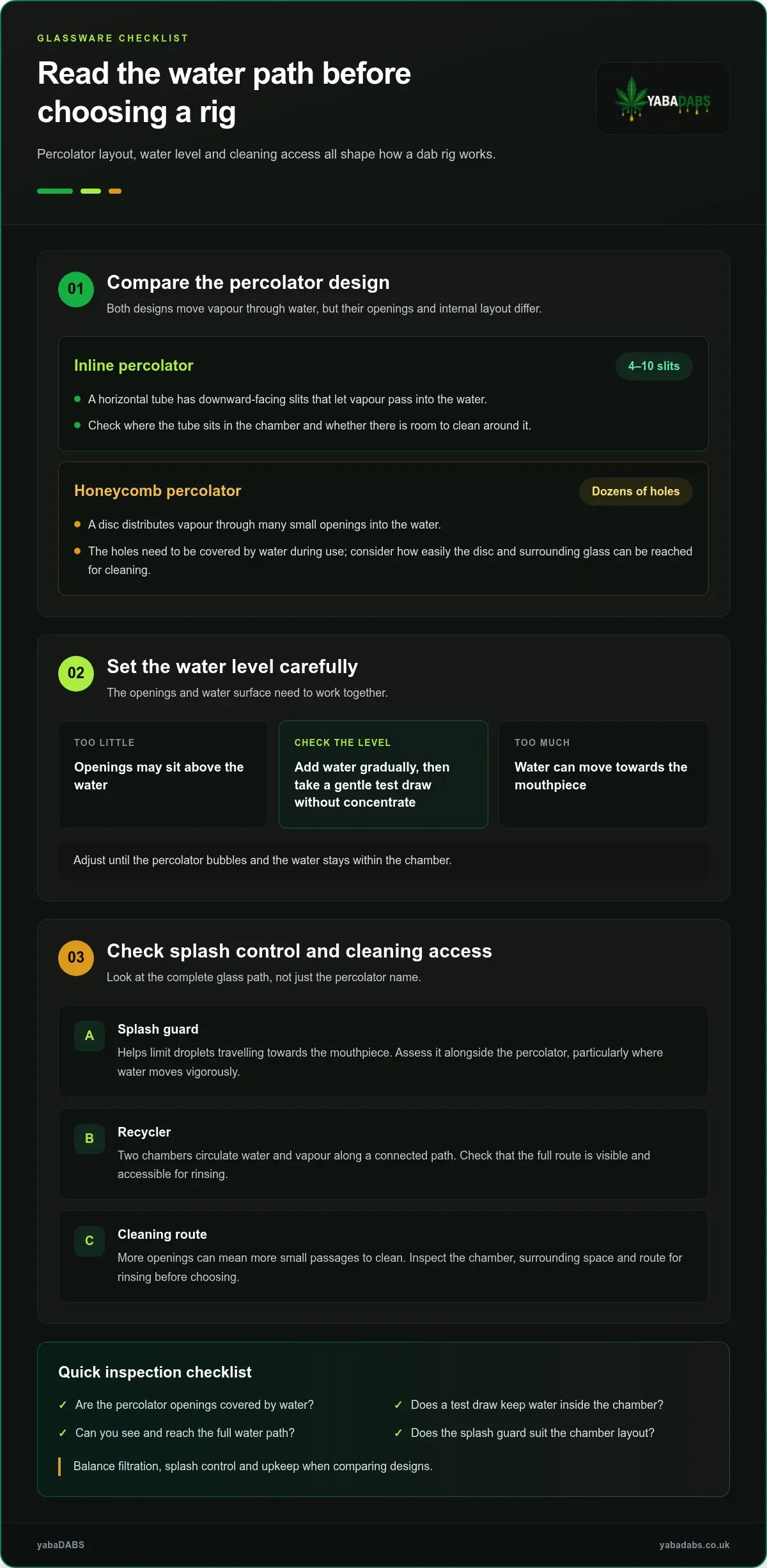
An inline percolator uses a horizontal tube with 4-10 downward-facing slits. Vapour passes through those openings into the water. The slit count and position affect the number of visible bubbles, but don’t tell you everything about the draw. Look at how the inline tube sits inside the chamber and whether you can reach around it for cleaning.
A honeycomb percolator uses a disc with dozens of tiny holes. These openings distribute vapour through the water in many small streams rather than through a single outlet. Placement matters: the holes should be covered by water during use. Compare a honeycomb disc with an inline tube by considering the rig’s overall shape and how easily you can remove residue.
More openings can mean more small passages to clean. For example, a narrow chamber around a honeycomb disc may be harder to reach than a simple, open design. Inspect the glass from different angles before choosing. Check the percolator’s position, the surrounding space and whether there’s a clear route for rinsing. These details make maintenance part of the design decision, not an afterthought.
Percolators and water filtration
A dab rig percolator can filter water and help cool vapour before it reaches the mouthpiece. As vapour passes through the water, the percolator breaks its path into bubbles. The structure determines where those bubbles form. Inline slits and honeycomb holes create different pathways, so compare the internal layout rather than relying on the percolator’s name alone.
Water level affects whether a percolator’s openings are submerged. Too little water can leave holes above the surface; too much can push water towards the mouthpiece during a draw. Add water gradually, then take a gentle test draw without concentrate. Adjust the level until the percolator bubbles and the water stays within the chamber.
A splash guard helps limit droplets travelling towards the mouthpiece. Assess it alongside the percolator, especially if water moves vigorously through the chamber. A recycler adds another consideration: its two chambers circulate water and vapour along a connected path. Check that the full route is visible and accessible for rinsing.
Choose by balancing filtration, splash control and upkeep. A honeycomb disc offers dozens of small openings; an inline design has 4-10 slits. Either can suit a different chamber layout. For glassware and accessories, explore options that fit the setup you have in mind, and compare each rig’s water path before deciding.
An in-line option can also be compared by overall size: the Premium Glass Bong Dabbing Rig with Inline Percolator is 16-25 cm tall. Consider whether that height suits the available space for handling and rinsing, then check the water path and splash control in the assembled rig. The stated height alone does not show how accessible its internal surfaces are, so inspect the chamber and percolator before deciding.
Recommended rig size and glass material
For general use, a borosilicate glass dab rig measuring 6-8 inches is a practical starting point. The right size also depends on storage, handling and the space around the joint. Think about where the rig will sit before comparing shapes. A setup that fits your shelf should also leave room to lift and handle it comfortably.
Examples show how varied rig heights can be: some designs measure 11 cm or 15 cm, while others reach 24 cm. These figures describe height, not the full space a rig needs. A broad base may take up more surface area than a narrow shape. Check the base width and the height above the joint when assessing a display or storage spot.
Measure your chosen space, then allow room above the joint for the banger and any fitted accessories. A 15 cm rig still needs clearance for its attached parts. If you plan to store it on a shelf, check the opening and surrounding space. These practical checks help you compare glassware for concentrate setups against your actual room, rather than choosing by height alone.
Check glass construction and stability
Borosilicate glass is commonly used for dab rigs because of its heat resistance, clean flavour and versatility. It suits a glass body paired with a high-temperature banger or nail. Inspect the base, body and joint separately. Check that the rig sits evenly and that its connection aligns with the component you plan to use.
Glass thickness and shape affect how a rig feels to hold, but thickness alone doesn’t tell you everything about the design. Inspect the joint and any narrow connecting sections for visible damage. A stable base helps keep the rig steady on a level surface. Keep these details in mind when comparing glassware for concentrate setups, including designs with different chamber profiles.
Before deciding, picture the complete arrangement. Include the banger, cap and any accessories in your clearance check. A rig measuring 16 cm needs space above its joint, not just room for the glass body. If you move the rig between storage and use, consider its grip and balance as well.
Use these checks to narrow your options:
- Measure the space: Check shelf height, surface width and access around the rig.
- Match the joint: Select a compatible banger or nail for the connection.
- Compare profiles: Consider how a 15 cm rig differs from a 24 cm design.
- Inspect the glass: Look at the borosilicate body, joint and base.
The 6-8-inch borosilicate recommendation offers a starting point, not a rule for every space. Consider storage, clearance and the components you’ll pair with the rig. Once those details are clear, choosing a suitable size becomes a more practical decision.
Basic dab rig use
Clean a glass dab rig only after it has cooled completely. Empty the water, rinse the glass, then let each part dry before reassembly.
Start with a stable, clear work surface. Check that the rig sits flat and its joints fit together securely. Add water gradually, then take a gentle test draw. Water should move through the chamber without splashing towards the mouthpiece. Adjust the level if needed.
Make sure the banger or nail is in place before use. Follow the instructions supplied with the component, as designs can differ. Use a suitable tool to handle concentrate rather than touching a heated surface. Keep hands, sleeves and nearby objects clear of the hot banger.
Glass can remain hot after use. Don’t handle or clean the banger or nail until it has cooled completely. Set the rig down on a stable, heat-safe surface and keep it away from edges, where a knock could tip it over or break the glass.
Water levels and everyday care
Draw steadily rather than pulling sharply. A forceful inhale can send water towards the mouthpiece, particularly if the chamber holds too much. If droplets reach the mouthpiece, pause and adjust the water level before continuing. Keep the rig upright while handling it.
For routine care, clean the glass body and removable parts separately. A practical sequence is:
- Cool the rig: Wait until the banger or nail is completely cool.
- Empty the chamber: Pour out used water before rinsing.
- Rinse the glass: Use warm water to loosen residue from accessible surfaces.
- Clean the details: Use a soft brush around the joint and mouthpiece.
- Dry and reassemble: Let the parts dry before fitting them together.
Recycler rigs and percolators have internal pathways that need attention. Rinse through each opening and look for visible residue around the water path. Avoid forcing a brush into narrow glass channels. After cleaning, check that removable parts sit securely.
Changing the water regularly also helps keep the chamber clear. Replace standing water after each session, and inspect the glass before putting it away. A cloudy chamber, visible residue or a loose connection signals that maintenance is due. Check the rig over a clear surface.
Store a dry rig upright in a stable place. Keep the banger separate if its position makes the setup top-heavy. Before using it again, check the glass for chips and confirm the joint still fits properly. These small checks help keep the setup clean, steady and ready to use.
Dab rig purpose and components
A dab rig brings together glass, water and a heated component. Knowing each part’s role helps you choose compatible pieces.
Glass joint sizes and types
The joint connects the rig to its banger or nail, so check its diameter, gender and angle before choosing a replacement. Available product examples include 14 mm male bangers with a 90-degree angle. That example shows why matching the connection matters; don’t assume every rig uses the same joint.
Look at the joint on your rig, then compare it with the banger’s listed size and orientation. A mismatch can prevent a secure fit or leave the banger at the wrong angle. When assembling a new setup, choose the rig and heated component as a pair. The joint is the deciding connection, not a minor detail.
Concentrate setup accessories
A typical setup includes a water chamber, joint, banger or nail, and mouthpiece. The banger or nail provides the heated surface, the chamber holds water, and the mouthpiece completes the air path. A carb cap is another accessory used with a banger. Choose accessories to suit the glass rig and its connection.
Before assembling, lay out each piece and check how it fits. For example, match a 14 mm male banger to a compatible joint, then position the mouthpiece and water chamber securely. Keep the banger stable and ensure the rig sits upright. This simple fit check helps catch incompatible parts before use.
Each component has a distinct role. The water chamber holds water along the vapour path, while the joint connects the rig to its banger or nail. The mouthpiece is where you draw from the assembled setup. Quartz bangers and glass nails are examples of high-temperature components used with concentrate rigs.
Think of the setup as connected parts rather than one glass object. The rig’s joint determines which banger or nail can attach; the chamber and mouthpiece shape the route through the glass. A carb cap can be used as an accessory with a banger-based setup. Start by identifying the joint, then choose compatible parts.
Use this quick component check before assembling the rig:
- Rig: Check the chamber and joint for a stable, intact connection.
- Banger or nail: Match its joint size, gender and angle to the rig.
- Mouthpiece: Confirm it forms the intended draw point.
- Carb cap: Pair it with the banger if your setup uses one.
To explore glassware and related accessories for your setup, browse the glassware selection.
Find compatible dab rig glassware at yabaDABS
Browse our dab rigs and dab accessories. Match the joint size, fitting and banger angle before ordering. If you need help checking a fitting, ask our Lisburn team.
Choose a setup that fits your next step
The right glassware for concentrate setups is the option that suits your space, preferences and intended use. Before deciding, note what matters most to you: a particular glass design, a more compact arrangement, or a different device format. This short list gives your comparison a clear starting point.
yabaDABS offers glassware and smoking accessories, alongside options including Hamilton Devices vaporisers. Explore those offerings in relation to the setup you have in mind, without assuming every device works the same way. A considered choice starts with matching the product type to your preferences.
Ready to take the next step? Contact yabaDABS about dab rigs and explore the range. Keep your priorities in view, take your time, and choose the setup that feels right for you.
Frequently Asked Questions
What Is a Dab Rig?
A dab rig is a water pipe designed for use with concentrates and a heated surface. Unlike a standard water pipe, it has a banger or nail to hold the concentrate during use. For example, a quartz banger can connect to a glass rig through a matching joint. Check the connection before pairing components, as the joint determines which banger fits.
Why Choose a Dab Rig?
Choose a dab rig if you want a glass setup built around a banger or nail. Its dedicated parts let you select a chamber, joint and heated component that work together. For example, if you’re replacing a damaged banger, you can focus on matching the existing joint rather than changing the whole setup. A rig may be less suitable if you prefer a handheld or electronic device format.
What glass and materials are safest for concentrate rigs?
Borosilicate glass is commonly used for rig bodies because it resists heat. Quartz is also used for bangers, which receive direct heat. No material makes a rig unbreakable or removes the risk of burns. Before use, inspect the glass for chips or cracks, confirm the banger fits securely, and keep heated parts away from hands and nearby surfaces. Replace damaged glass rather than using it.
How much do glass dab rigs and accessories cost in the UK?